


Micro-Frontend Architecture: Breaking Down the Monolithic Frontend
In March 2014, Martin Fowler and James Lewis released an iconic essay on Fowler’s website describing microservices, a new software architectural style. The creation inspired the creation of micro frontends. [5]
Developers, architects, and CTOs should all be aware of this architecture. It breaks down monolithic codebases into smaller, more manageable parts.
Melvin Conway, American computer scientist, states: “Any organization that designs a system (defined broadly) will produce a design whose structure is a copy of the organization's communication structure.” [6]
To put it into simpler words, "When a group of people makes something, like a new toy or a game, the way they work together will shape how that thing turns out."
Too often there have been amazing architectures on paper that, unfortunately, did not translate well into the real world. In today's digital age, websites and applications are becoming increasingly complex. This complexity has led developers to seek new ways to build, maintain, and scale these digital products more efficiently. One of the recent advancements in software development is the micro-frontend architecture. But what exactly is micro-frontend architecture, and why are companies adopting it? Let’s break it down in simple terms that everyone can understand, regardless of their technical background.
What is Micro-Frontend Architecture?
Imagine your favorite website or application as a giant, interconnected puzzle with many pieces. Traditionally, all these pieces were tightly connected in one big unit, like a completed jigsaw puzzle. If one piece didn’t fit right or was damaged, it could disrupt the entire picture.
Micro-frontend architecture changes this by dividing the big puzzle into many smaller, independent puzzles, each with its own unique picture that contributes to the overall design. Each smaller puzzle piece is like a "micro-frontend," which means it can be developed, updated, or replaced without impacting the rest of the puzzles around it. This approach allows for greater flexibility and easier management of complex websites and applications [1].
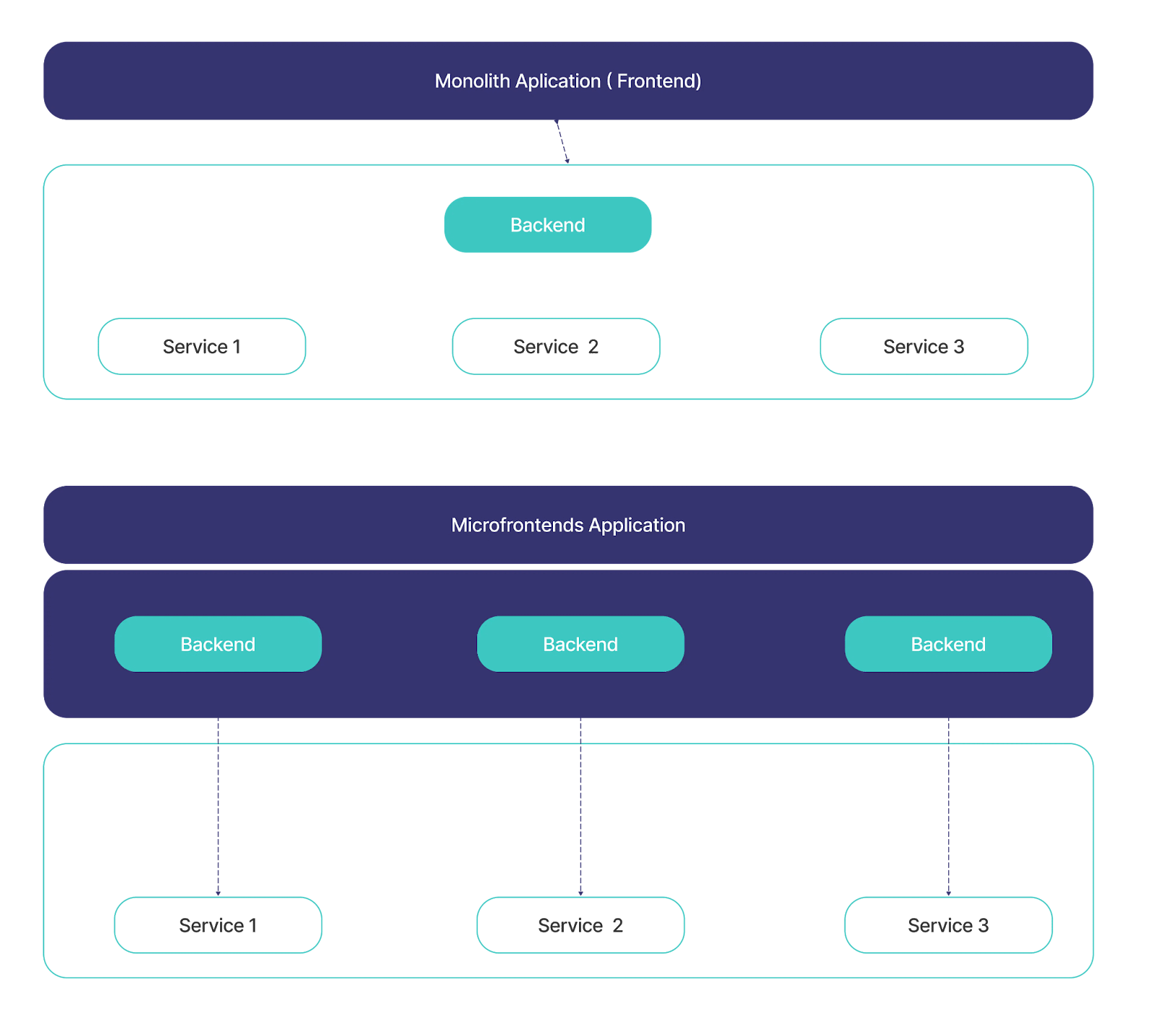
Benefits of Micro-Frontend Architecture
Improved Scalability
In a micro-frontend setup, teams can work on different parts of a website or application independently. This allows for multiple teams to work simultaneously, speeding up development and enabling the application to scale more effectively [2].Independent Development and Deployment
Each team is responsible for a specific feature or section of the application. They can choose the tools and frameworks they prefer, allowing them to develop and deploy their part independently of the others. This independence means that updating one part of the application doesn’t require redeploying the entire application [3]. In addition, teams of tens or even hundreds of developers can work on a project that is easy to scale through using micro frontends!Easier Maintenance and Upgrades
Because the application is divided into smaller pieces, it’s easier to maintain and upgrade. Developers can identify issues or bugs within a specific part of the application and fix them without touching the rest. This modularity simplifies testing and reduces the risk of introducing new bugs into the entire system [3].Flexibility in Technology Choices
Different teams can use different technologies that are best suited for their part of the application. For example, one team might use React for a high-interaction feature, while another might use Angular or Vue.js for a simpler, static part. This flexibility can lead to better performance and more innovative solutions [1].Decentralized Governance: Micro frontend architecture empowers developers to make the right decision. Unlike a monolith code base structure, key decisions are made by the most experienced or highest-ranked people, micro frontends allow different segments of a team to tackle the technical aspects of a problem without causing compromises for the entire code base [5].
Isolated Failure: Since micro frontends includes splitting a monolith into tens, if not hundreds of microservices, one failure is very unlikely to disturb the rest of the application.
Faster Time to Market
Because teams can work independently and deploy their changes without waiting for a larger, coordinated release, new features and improvements can reach users more quickly. This agility is particularly valuable in competitive markets where being first can be a significant advantage [2].

Challenges of Adopting Micro-Frontend Architecture
Complexity in Integration
While each micro-frontend can be developed independently, all these pieces must still come together seamlessly. Integrating different parts can be complex, especially when they are built using different frameworks or libraries. Ensuring a consistent look and feel across the application requires careful planning and coordination [4].Increased Initial Setup Costs
Setting up a micro-frontend architecture requires a well-thought-out strategy and more initial effort compared to a monolithic approach. The infrastructure, tools, and processes need to be established to handle independent deployments, continuous integration, and a consistent user experience [1].Shared State Management
When multiple teams are working on different parts of an application, sharing data or maintaining a global state can be challenging. Each team might need access to some shared information (like user authentication status), and managing this shared state across multiple micro-frontends requires additional effort and coordination [3].Performance Overhead
An application built using micro-frontends might load slower initially because it has to load multiple independent pieces, each possibly built with its own set of libraries and dependencies. However, this can be mitigated with proper optimization techniques like lazy loading and code splitting [2].Inconsistent User Experience
If different teams use different technologies or design principles, there is a risk of creating an inconsistent user experience. Ensuring a unified design and experience across various micro-frontends requires strict adherence to design guidelines and regular communication between teams [4].
When Should You Consider Micro-Frontend Architecture?
Micro-frontend architecture is not a one-size-fits-all solution. It is best suited for large, complex applications with multiple teams working on different features. Companies that want to speed up development, enable independent deployments, and use diverse technologies might benefit the most from this approach [1].
However, for smaller projects or teams, the additional complexity of managing multiple micro-frontends might not be worth the effort. In such cases, a simpler monolithic approach might be more efficient [3].
Famous case studies of micro frontends
Spotify: a world-renowned music streaming service. Spotify now employs micro frontends in its desktop applications, using iframes to integrate different sections such as music playbacks, search, and playlists. This approach allows for teams to work independently on different features, promoting faster updates and improvements. [7]
DAZN: a sports streaming service, leverages micro frontends to streamline its delivery of content across its numerous platforms. Through micro frontends, DAZN ensures that only the necessary components are loaded at any given time, based on routing information. This setup not only speeds up the loading process but also enhances the performance by reducing the load on the browser. [8]
HelloFresh: a digital service that delivers ready-to-be-made recipes to peoples’ homes. It has recently shifted from a monolithic approach to a micro frontend approach. This allows teams to work on isolated parts of the application such as user account management or their order processing systems, without the two compromising each other. [9]

Conclusion
Micro-frontend architecture represents a significant shift in how web applications are built and maintained. By breaking down a large application into smaller, independently deployable pieces, companies can achieve greater flexibility, scalability, and faster time to market [2]. However, like any architectural choice, it comes with its own set of challenges. Understanding both the benefits and the potential drawbacks is crucial for deciding whether this approach is right for your organization [3].
As with any significant technological decision, it’s essential to weigh the pros and cons carefully and consider the specific needs of your project and organization [1].
It is important to know that micro frontends are not the golden ticket to developing a robust and scalable application. However, it is important to know many projects fail or are delayed excessively due to poor architectural decisions.
References
Fowler, M. (2019). "Micro Frontends". MartinFowler.com.
Lanzani, L. (2021). "Micro-Frontends: A Microservice Approach to Frontend Web Development". Micro-Frontends.org.
Guindon, S. (2021). "An Introduction to Micro-Frontends". Smashing Magazine. Available at: Smashing Magazine.
Newman, S. (2015). Building Microservices: Designing Fine-Grained Systems. O'Reilly Media.
Luca Mezzalira. BUILDING MICRO-FRONTENDS : Scaling Teams and Projects Empowering Developers. S.L., O’Reilly Media, 2021.
“Committees Paper.” Www.melconway.com, www.melconway.com/Home/Committees_Paper.html.
Cutlip, Amy. “The Truth behind Micro Frontends: Insights from Real Case Studies.” Bitovi.com, Bitovi, 23 May 2024, www.bitovi.com/blog/the-truth-behind-micro-frontends-insights-from-real-case-studies. Accessed 30 Aug. 2024.
“You Probably Don’t Need a Micro-Frontend.” Scott Logic, blog.scottlogic.com/2021/02/17/probably-dont-need-microfrontends.html.
Brooks, Gary. “Micro Frontends: Pros and Cons - Fabrity Software House.” Fabrity Software House, 22 Aug. 2023, fabrity.com/blog/micro-frontends-pros-and-cons/. Accessed 30 Aug. 2024.
“Micro Frontends: What Are They and When to Use Them?” Aplyca Tecnología SAS, 12 Jan. 2023, www.aplyca.com/en/blog/micro-frontends-what-are-they-and-when-to-use-them.
KBall. “Microfrontends: The Good, the Bad, and the Ugly.” ZenDev, LLC, 17 June 2019, zendev.com/2019/06/17/microfrontends-good-bad-ugly.html. Accessed 30 Aug. 2024.
Bohdan Vasylkiv. “Core Ideas behind Micro Frontends - DevOps.dev.” Medium, DevOps.dev, 12 Dec. 2022, blog.devops.dev/core-ideas-behind-micro-frontends-507b81215498. Accessed 30 Aug. 2024.
 | A guest post by
|